ServicesFirst-Time Homebuyer Loans
First-Time Homebuyer Loans in Atlanta
Buying your first place means learning a dozen new terms in a few weeks. We match you with the loan program that fits your credit, income and savings, explain every line on the Loan Estimate, and keep checking in after closing so the first year of payments holds no surprises.

A first mortgage, explained before you commit
A first-time homebuyer loan is not one product. It is usually a conventional, FHA, VA or USDA loan, sometimes paired with a down payment assistance program, chosen because it suits a buyer with a thinner credit file or limited savings. The right fit depends on the numbers we look at first: your credit score, your debt-to-income ratio and the cash you can bring to closing.
We walk through how each option handles mortgage insurance, because that line often decides the real monthly cost more than the rate does. FHA charges an upfront premium plus a monthly one, while conventional private mortgage insurance can come off once you build enough equity. Seeing both side by side is how you avoid the loan that is easiest to close instead of the one that is cheapest to keep.
Our work does not stop at the closing table. We check back once you move in to review your first escrow statement, explain how property tax and insurance changes move your payment, and point out when removing PMI or a later refinance might make sense.
What we handle on a first-time buyer loan
- Side-by-side program comparison
- We price your scenario across conventional, FHA, VA and USDA where you qualify. For each one you see the payment, the cash to close and the mortgage insurance, and why one comes out ahead.
- A pre-approval built on documents
- We review pay stubs, W-2s, bank statements and a credit report before issuing a pre-approval. That way the letter holds up when a seller's agent calls to check it.
- Down payment assistance screening
- We check whether you fit state or local assistance programs and explain the strings attached, such as income limits, a required homebuyer education course or a second lien that comes due if you sell early.
- Credit and debt-ratio planning
- If a score or debt ratio sits just under a cutoff, we tell you which balance to pay down or which reporting error to dispute, and what that change is likely to unlock.
- Closing coordination
- Georgia purchases close with an attorney. We work with the closing attorney, the title company and your agent so the Closing Disclosure arrives on time and matches the Loan Estimate you approved.
- First-year follow-up
- Once you close, we check in on your first payment, your escrow analysis and your homestead exemption filing. We explain what to watch so the loan stays affordable.
Signs a first-time buyer program fits you
You have not owned in three years
Most first-time buyer programs count anyone who has not held an ownership interest in the past three years. Former owners often qualify again without realizing it.
Your savings cover less than 20% down
Low down payment loans exist, but each adds mortgage insurance in a different form. That tradeoff is worth comparing before you pick a program.
Your credit file is short or bruised
A thin file or a past late payment narrows conventional options, while FHA underwriting can be more flexible. We show which programs are open at your current score.
Your rent is close to a mortgage payment
If your rent already matches an estimated payment of principal, interest, taxes and insurance, it is worth seeing real numbers before your next lease renewal.
You need help with closing costs
Seller concessions and assistance programs can cover part of closing costs, within limits set by each loan type. Knowing those limits before you write an offer helps your agent negotiate.
How a first-time buyer loan moves from first call to keys
- 1
Free consultation
By phone, video or at our office, we go over income, debts, savings and the price range you have in mind. You leave with a short list of programs and the documents we need.
- 2
Pre-approval
We pull credit, verify income and assets, and issue a pre-approval with a realistic maximum price. We also show the payment at a lower price so you are not shopping at the edge of your budget.
- 3
Contract to clear to close
Once you are under contract, we order the appraisal, send the file to underwriting and work through conditions quickly. We explain each one in plain terms, like why a large deposit needs a paper trail.
- 4
Closing day
You sign with the closing attorney after reviewing a Closing Disclosure we have already gone through with you line by line.
- 5
Check-in once you move in
We follow up when your first payments post and again when the first escrow analysis arrives. We also explain how and when PMI can be removed.

What shapes the cost of a first mortgage
Your true cost is the rate plus lender fees plus mortgage insurance, spread over however long you keep the loan. We break each piece out on the Loan Estimate so you can compare offers line by line. These are the inputs that move it most.
- Credit score bands
- Rates and mortgage insurance are priced in score bands. Moving up one band can change both.
- Down payment and loan-to-value
- A larger down payment lowers loan-to-value, which reduces or removes mortgage insurance. Assistance funds count toward this differently by program.
- Loan program rules
- FHA, conventional, VA and USDA each carry their own upfront fees and insurance rules. The same purchase price can produce noticeably different payments.
- Taxes and escrow
- Property tax rates differ between Fulton, DeKalb and Cobb, and hazard insurance premiums vary by property. Both are collected through escrow and are often why a payment rises in year two.
- Points and lender credits
- You can pay points to lower the rate or take a credit toward closing costs at a higher rate. Which is better depends on how long you plan to keep the loan.
First-time buyer questions
Something not covered here? (404) 882-6441
How much do I really need for a down payment?
It depends on the program. Some conventional loans allow as little as 3% down, FHA allows 3.5% with qualifying credit, and VA and USDA can allow zero down for eligible borrowers. You also need cash for closing costs and reserves, which assistance programs or seller credits may help cover.
Will a pre-approval hurt my credit?
A pre-approval uses a hard credit inquiry, which can lower a score slightly. Scoring models generally treat several mortgage inquiries within a short shopping window as one, so comparing lenders over a few weeks has limited effect. We tell you before we pull credit.
Is FHA always the best choice for a first-time buyer?
No. FHA mortgage insurance usually stays for the life of the loan when you put less than 10% down, while conventional PMI can be removed as equity builds. With a solid score, conventional often costs less over time. We run both so you can see the difference.
What happens after closing?
We check in once your first payments post and again around your first escrow analysis. We explain why the payment changed if it did, remind you to file for the homestead exemption with your county, and tell you when you may be able to request PMI removal.
Do I have to come to your office?
No. We work at our office or by phone and video, whichever fits your schedule. Buyers in Decatur, Smyrna or East Point can handle most of the loan by video and sit down in person only to sign with the closing attorney.
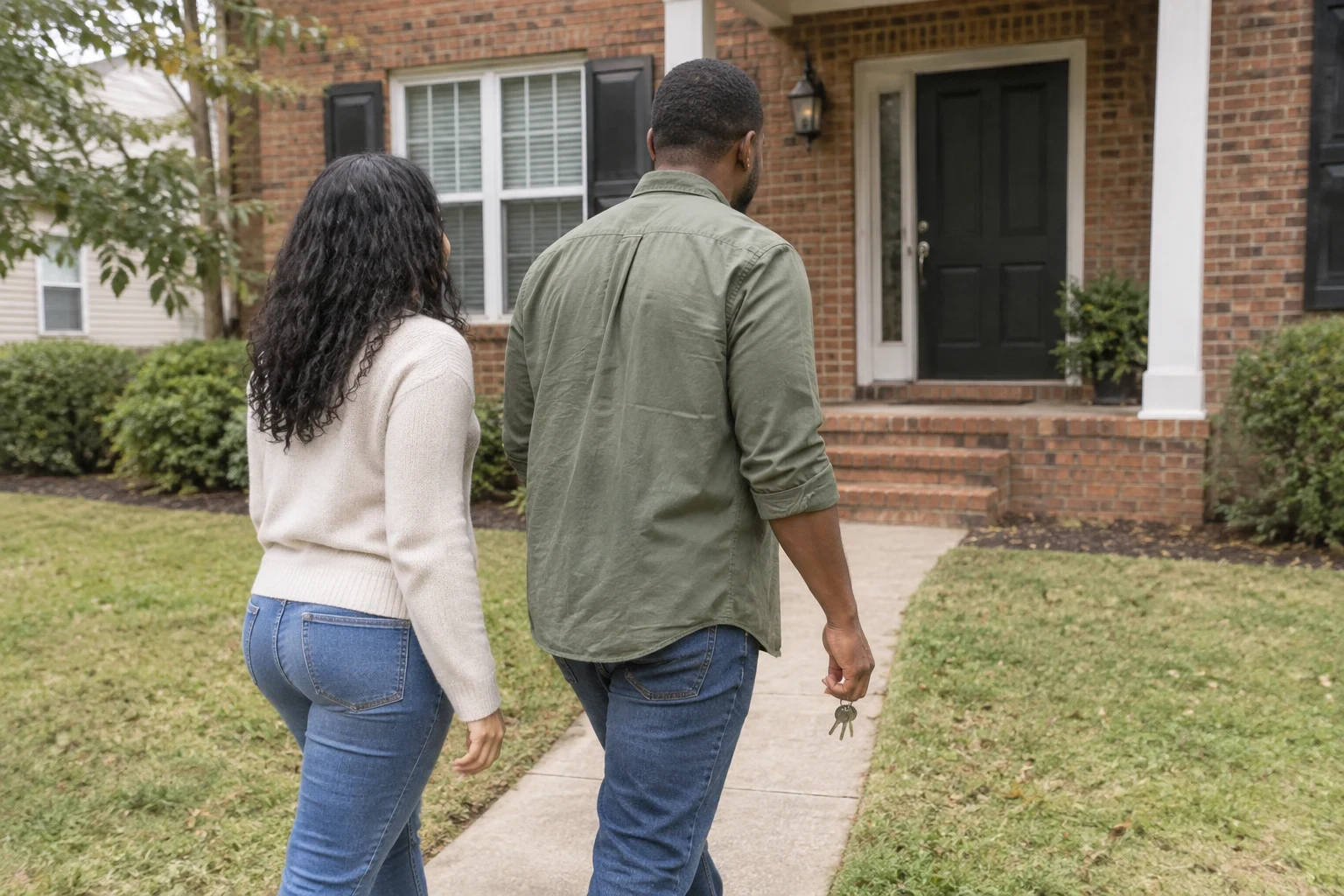
Start with the numbers, not the listings
A free consultation shows what you can afford, which program fits and what paperwork you will need before you make an offer. If you prefer, we can schedule a callback with a loan officer at a time that suits you.